

You’re at the checkout buying supplies for a job, and you reach for whichever card is easiest to grab. Later, a personal subscription comes out of your business account. Neither transaction seems like a big deal—until you’re trying to sort through months of activity and remember what everything was for.
Keeping business and personal expenses separate is one of the simplest ways to make bookkeeping easier. It gives you a clearer picture of your business and reduces the guesswork when it’s time to prepare records for your CPA.
After 15 years in the oilfields as a MWD and DD consultant and self-employed 1099 contractor, I understand how easily paperwork gets pushed aside during a busy workweek. The goal is to build a routine you can actually maintain.
Give your business its own checking account
Use a dedicated business checking account to receive customer payments and pay business expenses. Keep everyday personal spending—groceries, family purchases, and personal subscriptions—in your personal account.
This makes it easier to follow where business money comes from and where it goes.
Pro Tip: Review your automatic payments when you set up separate accounts. A personal subscription can quietly run through your business account for months if you forget to change the payment method.
Help Preserve Your LLC’s Corporate Veil
Keeping business and personal finances separate also matters for liability protection. An LLC generally provides a legal separation between its owners and the business. Oklahoma law says a member or manager isn’t personally liable for the LLC’s obligations solely because of that role. Oklahoma’s LLC liability statute
However, treating the company’s money as your personal spending account can weaken that separation. Mixing personal and business funds—often called commingling—can contribute to a court’s decision to “pierce the corporate veil,” depending on the applicable law and circumstances. That means holding an owner personally responsible for certain business obligations, potentially exposing personal funds and other nonexempt assets to collection. Cornell Legal Information Institute
An occasional purchase on the wrong card does not automatically erase your LLC’s protection. Still, it’s important to identify mistakes, record them correctly, and avoid making mixed spending your normal routine.
Use accounts in your business’s name, keep accurate records, and clearly document money moving between you and the company as contributions, distributions, loans, payroll, or reimbursements, as appropriate.
Good bookkeeping helps demonstrate that you treat your business as a separate entity. It cannot guarantee liability protection. I can help organize and document the financial side; a business attorney can advise you on protecting your LLC under the laws that apply to your situation.
Choose a card for business purchases
A dedicated card can help keep business purchases together. It doesn’t have to mean taking on debt; a debit card tied to your business account can serve that purpose.
If you use a business credit card, remember that the purchases and the payment of the card balance are different transactions. Recording a purchase as an expense and then recording the credit card payment as another expense can count the same cost twice.
Keep supporting receipts and invoices, too. If you’re struggling to get organized, start by gathering the records for your larger purchases—such as those over $100—while you build a consistent routine. That’s a starting priority, not a receipt requirement cutoff. Your bank feed helps track payments, but smaller purchases may still need supporting documentation showing what you bought and its business purpose.
Pro Tip: Find a system that works for you. I like to keep an envelope or a dedicated place for receipts in my vehicle. At least once a week, I do a quick review, take clear photos of the paper receipts, and save them in my “2026 Business Receipts” folder. Emailed receipts can go into a matching email folder. Small, consistent habits go a long way toward reducing stress and keeping your business organized.
Separate purchases at the checkout
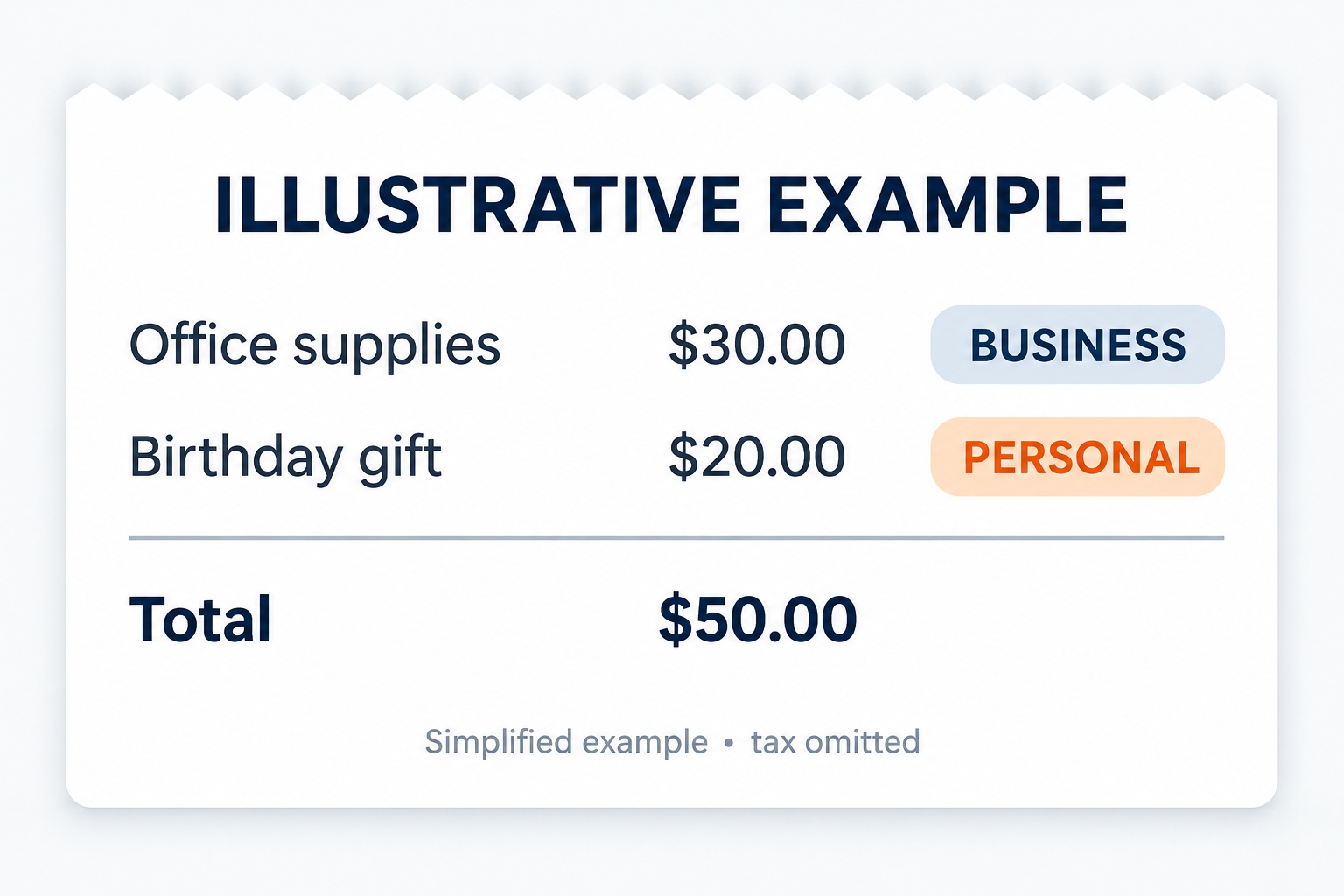
Suppose you’re buying office supplies and a birthday gift during the same shopping trip. Ask for separate transactions and use the appropriate card for each.
That small habit saves you from having to split one receipt later.
If a mixed purchase has already happened, save the itemized receipt and identify the business items while you still remember them. Don’t categorize the entire transaction as a business expense simply because you used the business card.
Move money to yourself deliberately
When you need money for personal spending, use the appropriate process for paying yourself, then spend from your personal account.
That process depends on your business structure. Owner draws, shareholder distributions, payroll, and expense reimbursements serve different purposes and should be recorded accordingly. Work with your tax professional to establish the right approach for your business.
The useful habit is consistency: know why money is moving between you and the business, and document it clearly.
What if you use the wrong account?
An occasional mistake doesn’t mean your books are ruined. It means the transaction needs attention.
| What happened | What to do next |
|---|---|
| You paid for a business purchase personally | Save the receipt, note the business purpose, and tell your bookkeeper so it can be recorded appropriately. |
| Your business paid a personal expense | Identify it promptly so it isn’t treated as a deductible business expense. |
| One purchase included business and personal items | Keep the itemized receipt and clearly identify each portion. |
The exact bookkeeping treatment depends on your business structure and whether you reimburse the amount. Avoid deleting a real transaction just to make it disappear from the books.
Make a short weekly review part of your routine
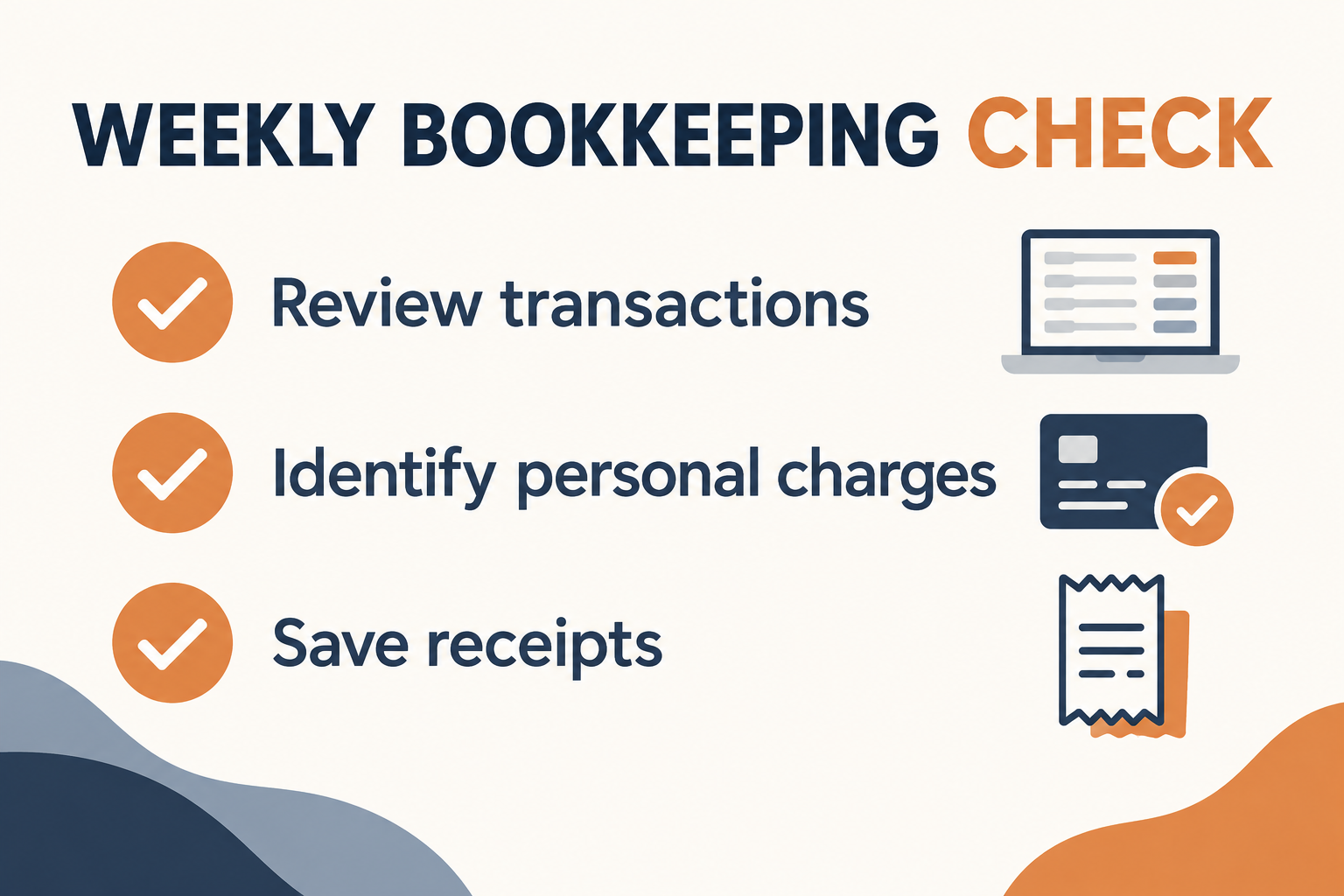
Set aside a few minutes each week to check for unfamiliar charges, misplaced personal purchases, and missing receipts.
Take clear photos of paper receipts. Save emailed invoices in a folder such as “2026 Business Receipts.” Add a brief note when the business purpose isn’t obvious.
Some costs, such as a phone used for both work and personal calls, may genuinely involve both business and personal use. Keep supporting records and discuss the appropriate treatment with your tax professional.
Good records help you understand your business and support the information reported on your tax return. The IRS recordkeeping guide explains these benefits in more detail.
Already have mixed transactions? Start where you are.
You don’t need perfect records before asking for help. Establish a cleaner routine going forward, gather the records you have, and identify the earlier transactions that need review.
At Blackshaw Bookkeeping, I help small business owners organize their records and develop practical bookkeeping habits. If business and personal spending have become tangled together, schedule a free consultation so I can learn about your situation and discuss the next step.